August 27, 2026
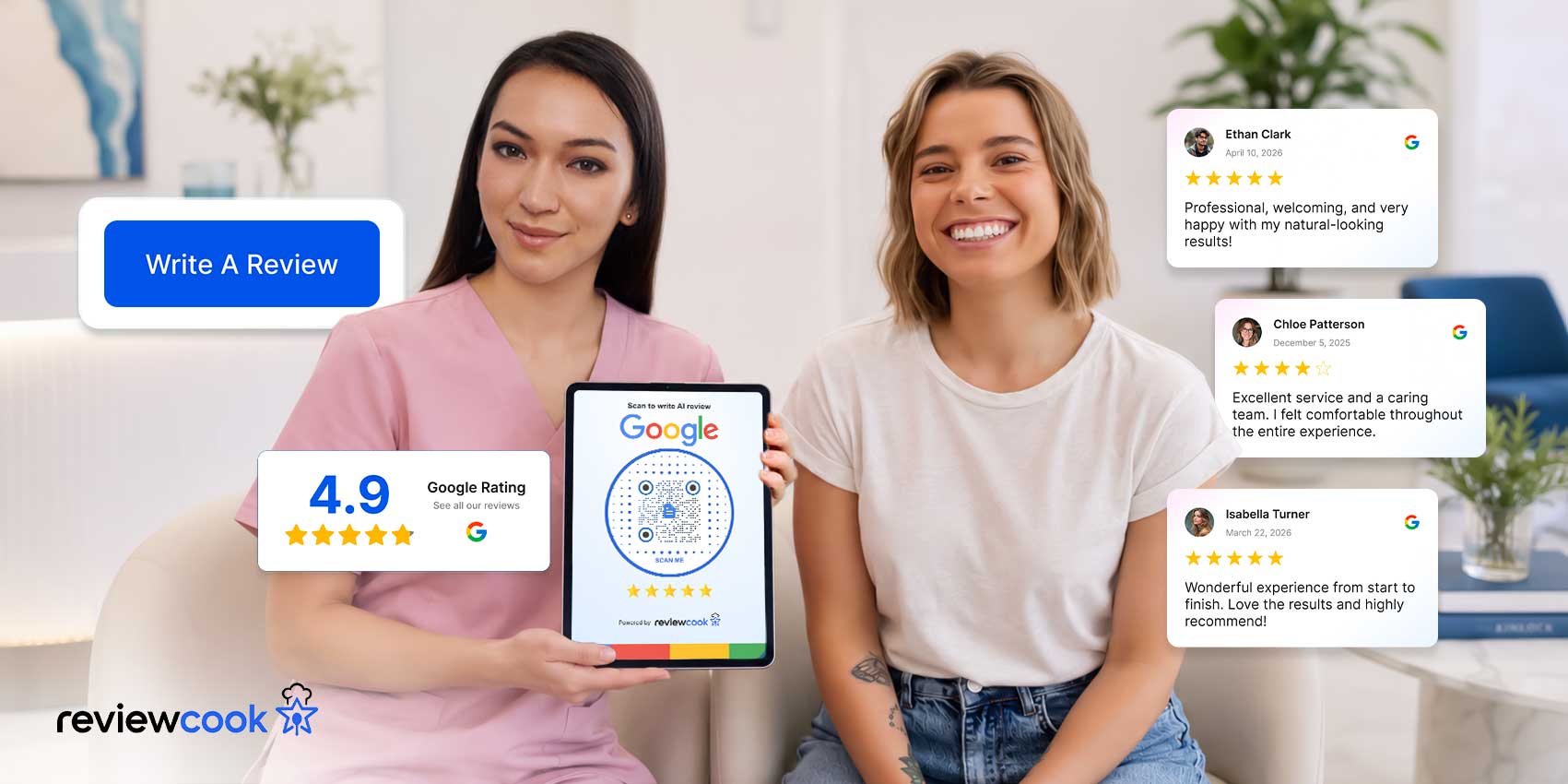
To get more Google reviews for your medspa or cosmetic clinic, create an experience clients genuinely appreciate, make it easy to share feedback, and ask at natural moments throughout the treatment journey.
A consistent flow of genuine feedback can therefore strengthen your online reputation while giving prospective clients more information as they compare medspas and cosmetic clinics.
From creating a welcoming treatment environment and offering thoughtful client touches to simplifying review requests and managing feedback effectively, the following strategies can help you build credibility and collect more genuine clinic reviews.
Google reviews are important for your medspa or cosmetic clinic because they help potential clients evaluate your business, build trust, and decide where to book.
97% of consumers read online reviews before choosing a local business, and 47% won’t consider a business with fewer than 20 reviews. [Source: BrightLocal Local Consumer Review Survey 2026]
For medspas and cosmetic clinics, reviews can be especially useful because clients often want to know what the experience is like before booking.
A review can tell them about your staff, treatments, service, and overall experience in a way that a Google Business Profile cannot.
A strong collection of recent, genuine reviews can also help your clinic stand out when potential clients compare similar businesses.
Rating expectations are becoming stricter as well, with 31% of consumers saying they will only use a business rated 4.5 stars or higher, compared with 17% the previous year. [Source: BrightLocal Local Consumer Review Survey 2026]
Getting more reviews starts with a good client experience, but the way you ask matters too. These strategies focus on making review requests feel natural while giving clients something genuine to talk about.
A compliment about your staff, treatment, facility, or overall service can be a natural opening to mention a Google review.
The request can feel more relevant when it follows something the client has already said about their experience.
Asking can also make a difference. 83% of consumers who were asked to leave a review went on to do so.
For example, if a client says, “I really love how my skin feels,” a staff member could respond:
“We’re so glad you’re happy with your experience. If you’d like to share it, we’d appreciate a Google review.”
This should be part of a consistent approach, not a way to decide which clients deserve to be asked.
Every client should have the same opportunity to leave a review. A spontaneous compliment simply gives your team a natural moment to bring it up in person.
Clients who decide to leave a review should not have to search for your clinic on Google first. Give them a direct review link or QR code that takes them straight to your review page.
For a medspa, these can be placed on materials and touchpoints already encountered, such as:
A short request can also make it easier for staff to stay consistent.
In person: “We’d love it if you could share your experience on Google. Here’s a quick link/QR code.”
SMS: “Thanks for visiting [spa name]! If you have a minute, we’d really appreciate your honest feedback: [review link].”
Email: Keep the message short, thank the client for visiting, and include a direct review link or QR code.
ReviewCook can help simplify this process with review-request QR codes. Its voice input feature also lets clients speak their thoughts, which can then be organized into a draft in their own words for them to edit or submit themselves.
The point is simple: if a client wants to share their experience, make it easy for them to do so.
The best time to ask for a review depends on the treatment.
For some medspa services, asking immediately after an appointment may be fine. For others, clients may need more time to recover or see how their results develop.
Consider the treatment timeline when planning your request:
| Treatment | Best time to ask | Why |
| Injectables or fillers | A two-week follow-up can give clients time to move past expected swelling or bruising and assess their experience. | Clients have had time to see how the treatment settles and form a more informed impression of their results. |
| Facials and rejuvenation treatments | A same-day or next-morning request can work while the appointment and initial results are still fresh. | These treatments often produce an immediate or short-term experience that clients can easily reflect on soon after the appointment. |
| Laser treatments or treatment series | Consider asking after a later session, such as the third appointment, when clients have had more time to evaluate their progress. | Clients may need multiple sessions before they can meaningfully assess their progress, making an earlier request less useful. |
| Body contouring | A results check-in can be a natural point to invite feedback once clients have had time to assess their progress. | Body contouring results can take time to develop, so waiting gives clients a better opportunity to reflect on their overall experience. |
The right timing gives clients enough space to reflect on the treatment instead of asking for feedback before they have had a chance to experience it fully.
The treatment itself is only part of the client experience. Small details around the appointment can shape what clients remember and what they eventually mention in a review.
A few ways to make the experience more memorable include:
Personalize the treatment: Take time to understand the client’s concerns, goals, and treatment history before recommending a service. Explain why the treatment fits their needs and what they can realistically expect.
Give clients a moment to see their progress: Depending on the treatment, this could mean a mirror reveal, reviewing progress photos with the client’s consent, or explaining what was accomplished during the appointment.
Give them something useful to take home: Aftercare instructions, an appropriate skincare sample, treatment information, or a short personalized note can make the experience feel more thoughtful.
These details do not need to be expensive. What matters is that they are relevant to the client’s treatment and show that your team has considered their needs.
They should never be offered in exchange for a review or a particular rating. Your medspa’s goal should be to provide better care, not to manufacture positive feedback.
A thoughtful follow-up can show clients that your establishment remains attentive after the appointment. For treatments that involve recovery or aftercare, it also gives clients a chance to ask questions and make sure everything is going as expected.
A follow-up can include:
Once those needs have been addressed, the follow-up can also be a natural time to invite honest feedback.
For example, a two-week follow-up after an injectable treatment could say:
“Hi [name]! Just checking in on how you’re feeling after your treatment. If you have a moment, we’d really appreciate your honest feedback on Google: [link]”
The timing should still match the treatment. A follow-up is useful because it is already part of the client journey, so the review request doesn’t feel like a completely separate interaction.
Mespas and cosmetic clinics should always protect patient privacy when requesting, monitoring, and responding to online reviews.
Even a well-intentioned public response can reveal that someone received treatment at the practice.
If your medspa is subject to HIPAA, do not confirm that a reviewer is a patient or disclose details about their treatment.
Keep public review responses general
A reviewer may openly describe a cosmetic procedure in their review, but that does not give the medspa permission to confirm or add information about their care.
For example, replying with “We’re sorry that your filler results were not what you expected” reveals information about the person’s treatment.”
Instead, keep your response focused on the feedback. Thank the reviewer, make a general statement about your commitment to patient care, and invite them to contact the clinic privately if they have concerns.
A simple response structure is:
For example:
“Thank you for sharing your feedback. We take concerns seriously and would be happy to discuss this with you privately. Please contact our office directly so our team can assist you.”
A client leaving a review does not automatically give a medspa permission to use their before-and-after photos, treatment progress photos, testimonials, or other identifiable content.
Get the appropriate written authorization separately if you want to use these materials.
This is especially important for cosmetic clinics because treatment results are often a major part of their marketing. A review and permission to use a client’s image are two separate things.
Front-desk and social-media staff should know how to respond when a review mentions specific treatment details.
Give your team simple response scripts and guidelines that show them how to thank reviewers, avoid confirming patient information, and move sensitive conversations to a private channel.
Having a prepared response also helps prevent well-intentioned employees from accidentally revealing private information while responding to a negative review.
Medspas and cosmetic clinics should avoid practices that can make reviews less trustworthy or violate Google’s policies.
Getting more reviews should be about making it easier for genuine clients to share their experiences, not trying to create a perfect rating.
Reviews should come from people who have genuinely interacted with your medspa or cosmetic clinic.
Do not purchase reviews from third-party services, ask employees to pose as customers, or create reviews for your own business.
Fake reviews can damage your credibility and put your Google Business Profile at risk.
Your team can make the process easier by providing a direct link or QR code, but clients should write and submit their own reviews.
Do not write a review for a client and ask them to approve it. Instead, give them an easy way to share what they actually experienced in their own words.
A review request should invite honest feedback, not push clients toward a particular rating.
Avoid telling clients to leave a five-star review, suggesting specific praise, or making them feel obligated to say something positive.
A simple request, such as “We’d appreciate you sharing your experience on Google,” gives clients room to provide genuine feedback.
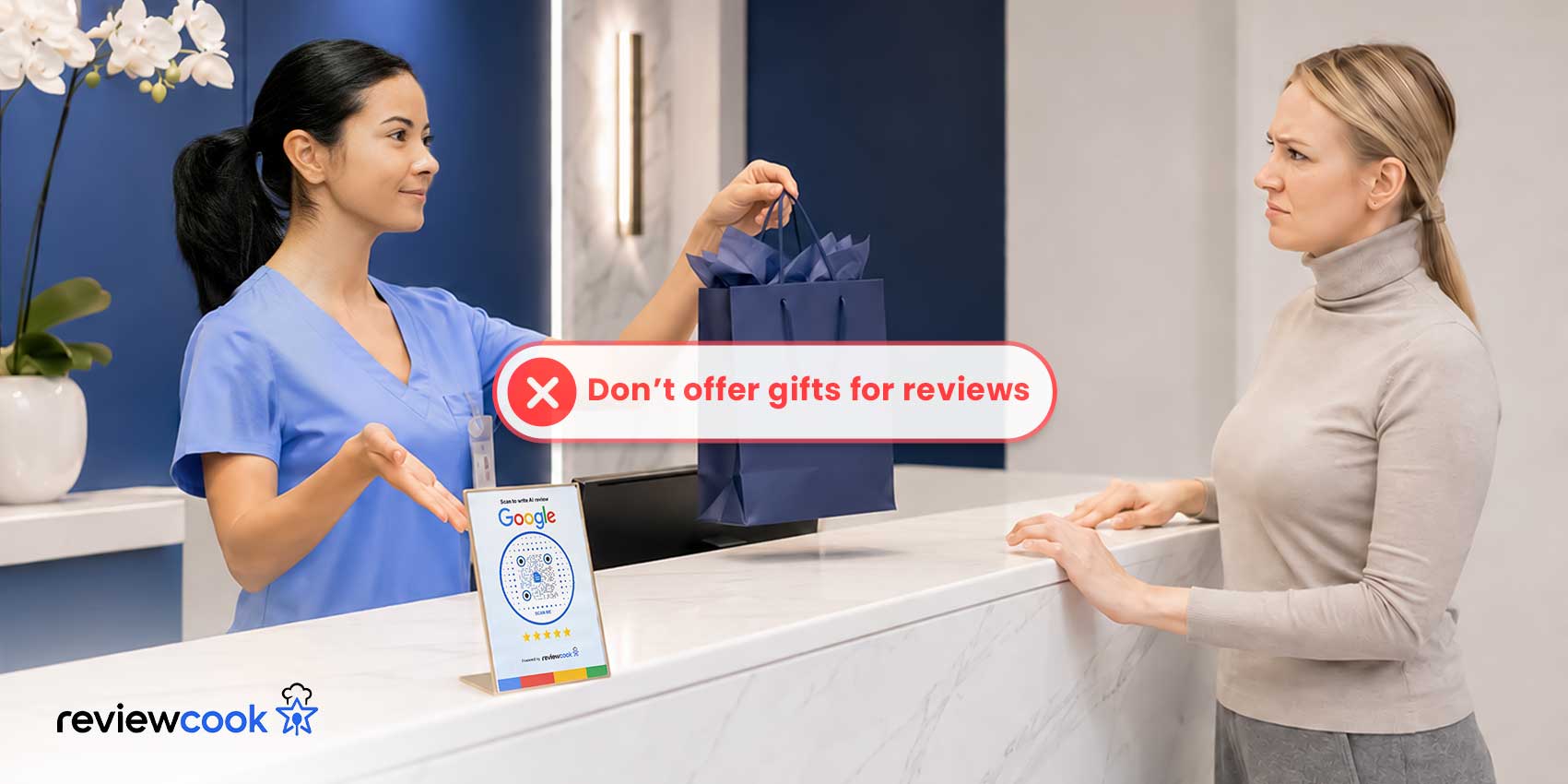
Do not offer discounts, gifts, cash, or other benefits specifically in exchange for a Google review.
A client’s benefits should not depend on leaving a review or giving a particular rating.
If you are considering an incentive-based promotion for another purpose, check Google’s current policies first.
Negative feedback is part of running a customer-facing business. Trying to hide or manipulate genuine criticism can damage trust.
Do not ask clients to remove honest reviews simply because they are unfavorable, and do not selectively request reviews from clients you expect to leave positive feedback.
Instead, respond professionally, address legitimate concerns, and use recurring feedback to identify areas where the client experience can improve.
Your Google Business Profile is often one of the first places prospective clients see when they search for your clinic.
Keeping it accurate and up to date can give those clients more confidence as they compare their options.
A few things to check include:
Getting more Google reviews for your medspa or cosmetic clinic starts with giving clients an experience worth talking about.
Ask consistently, match the request to the treatment, make the review easy to access, and follow up when it makes sense.
At the same time, pay attention to what clients are telling you through their feedback and use it to improve the experience.
ReviewCook can help make the review process easier with review-request QR codes and voice input that helps clients turn their own thoughts into a review draft without writing the review for them.
To get more Google reviews, create a memorable client experience, ask for honest feedback at the right time, and make it easy to leave a review with a direct link or QR code. Small touches like refreshments, product samples, and thoughtful aftercare can make the experience more memorable.