August 20, 2026

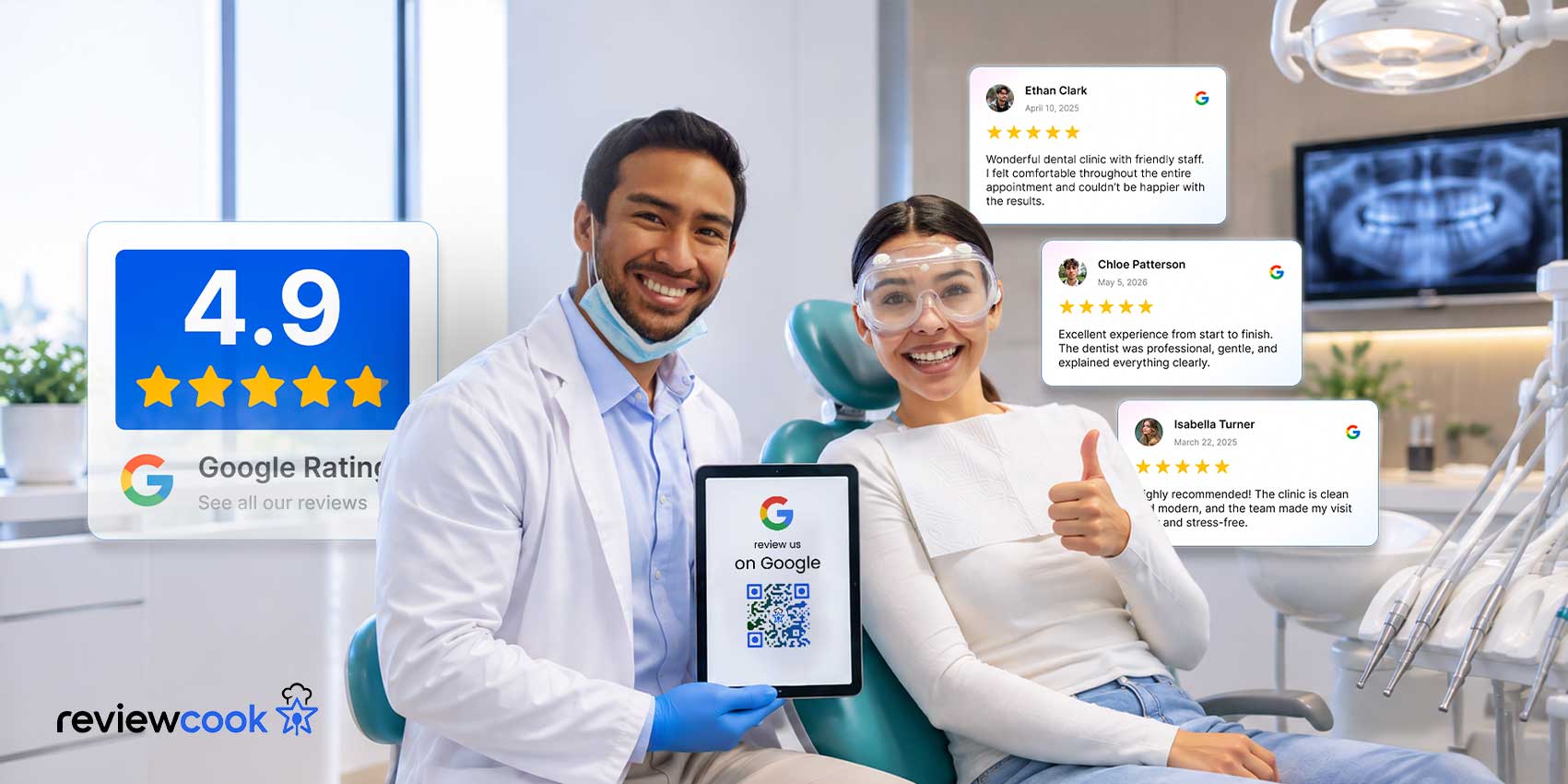
The best way to get more Google reviews for your dental or orthodontic practice is to consistently ask patients at the right time, make the review process as simple as possible, and respond professionally to every review you receive.
Combined with an optimized Google Review Business Profile, these strategies can help attract more patients and strengthen your online reputation.
From optimizing your online presence to encouraging patient feedback and managing reviews effectively, the following strategies can help you build credibility, improve local search visibility, and grow your practice with authentic Google reviews.
Google reviews are important for dentists and orthodontists because they build trust, influence patient decisions, strengthen online reputation, and support local search visibility for your clinic.
Before booking an appointment, patients often compare clinics by checking ratings, reading recent reviews, and looking at photos of the clinic. Reviews provide social proof that real patients have had good experiences with your service and care.
This is especially valuable for treatments such as braces, dental implants, and cosmetic dentistry, where patients may spend significant time and money on their care.
Google reviews can help patients evaluate:
| What patients value | What reviews can show |
| Quality of care | Patients’ experiences with treatment, service, and overall care. |
| Patient experience | How staff communicate, handle appointments, and make patients feel comfortable. |
| Practice credibility | A consistent stream of recent, reviews can make a practice more trustworthy. |
Following effective ways to get more Google reviews can help your practice make the feedback process more convenient for patients.
If you’re looking for how to get more reviews for a dental practice, start by making review requests part of your patient experience rather than treating them as a one-time campaign.
A consistent Google reviews strategy for dentists should make it easy for patients to share genuine feedback while giving your team a practical process for requesting, managing, and learning from reviews.
The end of a dental appointment can be a natural time to invite patients to share their experience, particularly when they have just completed a treatment or received answers to their concerns.
Patients are more likely to remember specific details about their visit while the experience is still fresh, making it easier for them to describe what they appreciated about the practice.
Natural moments may include:
Once you’ve identified the right moment to ask, choosing a convenient way for patients to leave feedback can make the process easier.
Making the review process easy can help dental patients share their experiences without adding another task to their busy schedules.
After an appointment, patients may be willing to provide feedback but abandon the process if it requires too many steps or they have to search for the clinic’s Google Review page themselves.
A clear, convenient review option can remove that friction and make it easier for patients to share their thoughts while the experience is still fresh.
Dental practices can simplify the process by:
The goal is to remove unnecessary friction, not pressure patients into leaving a review.
ReviewCook helps patients turn their own thoughts and experiences into clearer review drafts while preserving the original meaning of what they want to say. This gives patients a little more help putting their experience into words while keeping them responsible for reviewing and submitting their own feedback.
When patients can quickly find where to provide feedback and understand what is being asked of them, sharing an honest experience becomes a much simpler part of the post-appointment journey.
Making dental procedures feel less intimidating can help patients feel more comfortable, informed, and confident in their care.
Many patients experience some level of nervousness or anxiety before treatment, particularly when they do not know what to expect. Dentists can ease these concerns by explaining what will happen before a procedure, answering questions clearly, and giving patients time to prepare.
Simple touches, such as explaining unfamiliar sounds or sensations and checking that the patient is comfortable throughout treatment, can make the experience feel more manageable.
Ways to make procedures less intimidating:
When patients leave feeling that their concerns were taken seriously and their treatment was handled with care, they have a more positive experience to reflect on in their feedback.
Explaining treatment plans in plain language helps patients understand their dental care and feel more confident about their decisions.
Dental terminology can be difficult for patients who are unfamiliar with it, especially when treatment involves multiple procedures or visits.
Instead of relying on technical explanations alone, dentists can describe the problem, recommend treatment, expected timeline, and aftercare in terms that patients can easily understand.
Visual aids such as charts or 3D models, written summaries, or simple examples can also help patients remember important information after the appointment.
Ways to communicate treatment plans more clearly:
Clear communication can make patients feel more involved in their care and reduce uncertainty throughout a longer treatment journey.
Checking in with anxious patients can make dental visits feel more supportive and help patients communicate what they need.
Dental anxiety can affect how patients experience everything from the waiting room to the treatment chair, so recognizing signs of discomfort instead of dismissing them can make a meaningful difference.
Staff can ask patients about their concerns before treatment, and dentists can check in periodically during procedures. Giving patients a sense of control, such as agreeing on a signal to pause when needed, can help reduce stress.
Simple ways to support anxious patients:
When patients feel heard and supported, they may have a more meaningful experience to share afterward. ReviewCook helps patients turn their own thoughts and experiences into clearer review drafts while preserving the original meaning of what they want to say.
This gives patients a little more help putting their experience into words while keeping them responsible for reviewing and submitting their own feedback.
Making the waiting experience more comfortable can improve a patient’s overall impression of a dental practice, even when appointments do not begin exactly on schedule.
Unexpected delays can be frustrating, particularly for patients who are already anxious about their visit. Keeping them informed, providing a comfortable waiting area, and offering a relaxing activity can make the experience feel more manageable.
Ways to improve the waiting experience include:
A few thoughtful improvements can make a busy dental practice feel more considerate and organized. For patients, that attention to their time and comfort can become an important part of how they remember your clinic.
Giving patients clear post-treatment instructions helps them feel prepared after leaving the dental office and can make recovery less confusing.
Patients may forget verbal instructions once they get home, especially after a procedure, so providing them with simple written or digital guidance can help them remember what to do and what to avoid.
Instructions should cover the most important aspects of aftercare without overwhelming the patient with unnecessary information.
Ways to improve post-treatment guidance include:
Clear aftercare shows patients that their well-being remains a priority beyond the appointment itself. It can also help prevent misunderstandings and give patients greater confidence in managing their recovery.
Making treatment progress visible can help patients understand how their dental care is improving their oral health, function, or appearance.
This is particularly valuable for treatments that require several appointments, since patients may not immediately notice gradual changes.
Dentists can help patients see their progress by explaining improvements during follow-up visits, using appropriate images or scans, and highlighting milestones throughout treatment.
Ways to make progress more visible include:
When patients can clearly see how their treatment is progressing, they may feel more informed and engaged in their care.
It can also help them appreciate the work involved in achieving their results and leave them with a stronger overall impression of the practice.
Creating a comfortable experience for children can help make dental visits feel less intimidating and build positive associations with dental care from an early age.
Children may be unfamiliar with dental equipment, sounds, and procedures, so dentists and staff can use age-appropriate language and a calm approach to help them feel more at ease.
Small adjustments to the environment and communication style can make the visit more approachable for both children and their parents.
Ways to create a child-friendly dental experience include:
A positive experience can help children feel more comfortable returning for future appointments while giving parents greater confidence in the practice’s approach to pediatric care.
Patients may intend to leave a review after a dental appointment, but forget once they return to their normal routines.
A thoughtful follow-up can remind them to share their experience without putting pressure on them, particularly after appointments that involve multiple steps and require patients to recover at home.
For dental practices, follow-ups can be particularly useful after:
A thoughtful follow-up can give patients another convenient opportunity to share their experience. Keeping the message brief and giving patients a convenient way to provide feedback can make the process easier while respecting their time.
Monitoring Google reviews helps dental practices understand how patients experience everything from appointment scheduling and waiting times to communication, treatment, and follow-up care.
Responding professionally to reviews also shows current and prospective patients that the clinic takes feedback seriously.
Dental practices should pay attention to feedback about:
Regularly monitoring and responding to your dental clinic’s Google reviews helps you understand how patients perceive the care they receive and where the practice can improve.
Thoughtful responses can also show prospective patients that your team remains committed to providing a positive patient experience.
Over time, this ongoing attention to patient feedback can strengthen your practice’s reputation and build greater trust with both existing and prospective patients.
A thoughtful response shows patients that you value their feedback and demonstrates to potential patients that you are committed to providing excellent care.
While every reply should be personalized, the following examples can help you get started:
“Thank you for taking the time to share this feedback. We’re committed to a positive experience for everyone who visits our practice. Please call us at [number] if you’d like to discuss anything directly.”
“Thank you for sharing your feedback. We appreciate your comments and are always looking for ways to improve the patient experience. If there’s anything we can do better during your next visit, we’d love the opportunity to exceed your expectations.”
“Thank you for bringing this to our attention. We’re sorry to hear that your experience didn’t meet your expectations. We take patient feedback seriously and would appreciate the opportunity to discuss your concerns privately so we can better understand the situation and work toward a resolution.”
NEVER DO: Never disclose personal health information or discuss treatment details in a public response, even if the patient mentions them first. Keep your replies professional, empathetic, and focused on resolving concerns while protecting patient privacy.
Above all, never confirm or deny that a reviewer is a patient in a public reply.
Optimize your Google Business Profile by keeping your business information accurate and up to date, adding relevant photos, selecting the right categories, and consistently collecting and responding to patient reviews.
These efforts can improve your dental practice’s visibility in local search while giving prospective patients the information and social proof they need to feel confident choosing your practice.
Start by claiming and verifying your Google Business Profile if you haven’t already. Then, make sure every section is complete and up-to-date, including your practice name, address, phone number, website, office hours, services, etc.
Providing accurate information makes it easier for prospective patients to contact your clinic and reduces the chances of confusion or missed appointments. It also signals that your business is active and well-managed.
Why this works: Patients expect businesses to have accurate, up-to-date information online. An incomplete profile can create doubt and may even cause prospective patients to choose another practice that appears more reliable and professional.
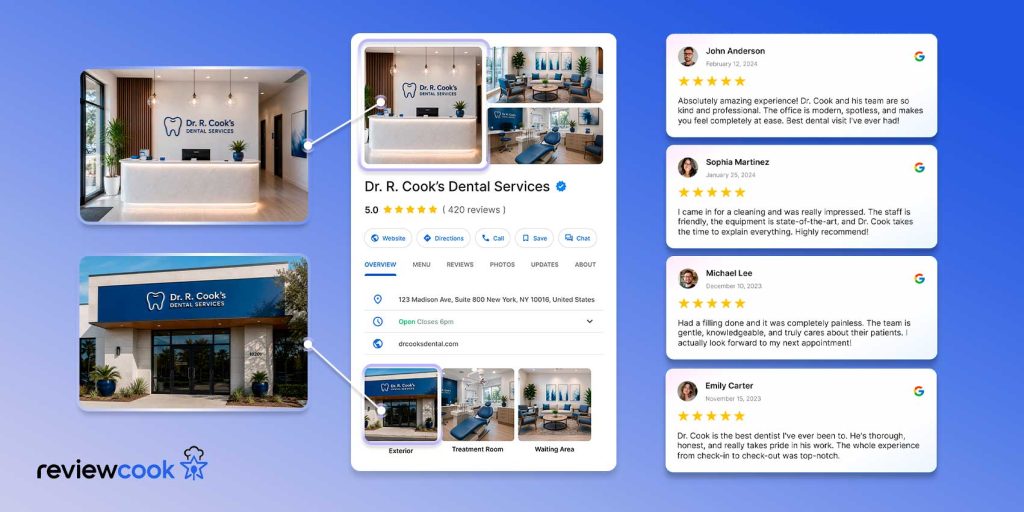
Disclaimer: Dr. R. Cook’s Dental Services is not a real dental clinic in the City of New York. Image created for illustrative purposes only.
Photos play a significant role in how prospective patients perceive your practice. Before choosing a dentist or orthodontist, many people browse photos to get a feel for the clinic, much like they would when researching a restaurant or hotel.
Include high-quality images of your reception area, treatment room, dental equipment, exterior signage, and an inviting photo of your staff. These visuals help patients know what to expect and can make your practice feel more welcoming.
Why this works: People are naturally more comfortable with places they can visualize. Professional photos reduce uncertainty, build familiarity, and create a stronger first impression before a patient even visits your clinic.
Your Google Business Profile should always reflect your latest business information, including office hours, contact details, services, and holiday schedules.
Outdated information can lead to missed appointments and walk-ins, unanswered calls, and calls to inactive hotlines, which can give a negative impression of your clinic.
Why this works: Accurate information creates a smoother patient experience from the very beginning. It also demonstrates that your practice is active, attentive, and committed to providing reliable service.
Dental and orthodontic practices should follow Google’s review policies by asking for genuine, unbiased feedback without offering incentives, selectively soliciting only positive reviews, or attempting to influence what patients write:
Keep these guidelines in mind:
Following these guidelines helps your clinic collect authentic feedback while maintaining a trustworthy review profile.
Google reviews can support your dental clinic’s local SEO by strengthening your online reputation and helping prospective patients evaluate your practice in local search results.
Google states that local search rankings are primarily based on relevance, distance, and prominence. Reviews can contribute to prominence by providing information about your business and showing how patients have rated their experiences.
A strong review profile can also influence how prospective patients perceive and interact with your dental practice in local search:
Reviews are only one part of local SEO, so they’re most effective when paired with a well-optimized Google Business Profile. Before asking patients for reviews, it’s important to ensure your profile gives prospective patients a positive first impression.
Getting more Google reviews starts with creating experiences patients genuinely want to talk about.
From making procedures less intimidating and explaining treatment plans clearly to supporting anxious patients, improving the waiting experience, and following up after treatment, small improvements throughout the patient journey can leave a lasting impression.
Once you’ve created an experience worth sharing, make it easy for patients to provide honest feedback. Ask at appropriate moments, follow up when patients may have forgotten, remove unnecessary friction from the review process, and respond thoughtfully to the feedback you receive.
The goal isn’t to manufacture positive feedback. Focus on providing insightful, patient-centered care and give patients a simple way to share their honest feedback.
Over time, those genuine experiences can become valuable social proof that helps prospective patients feel more confident choosing your clinic.
When patients have a positive experience, giving them a simple way to put that experience into words can help turn their feedback into something they’re comfortable sharing.
ReviewCook makes that process easier by helping patients organize and refine their own thoughts while keeping their feedback true to their experience. See how ReviewCook can fit into your dental practice’s approach to patient feedback.
You can create a Google Review QR code by copying your Google Business Profile review link and generating a QR code with Google's built-in tool or a platform like ReviewCook.